Expert Contractors
Parking Lot Striping San Francisco CA: Code & ADA Compliance
- California Title 24 and federal ADA accessibility stalls engineered to strict 2% grade tolerances on complex municipal slopes.
- SFFD-compliant fire access lanes, red curbs, and reflective directional stenciling for high-density properties.
- Rapid-dry, low-VOC traffic formulations meeting Bay Area Air Quality Management District (BAAQMD) Regulation 8 Rule 3 standards.
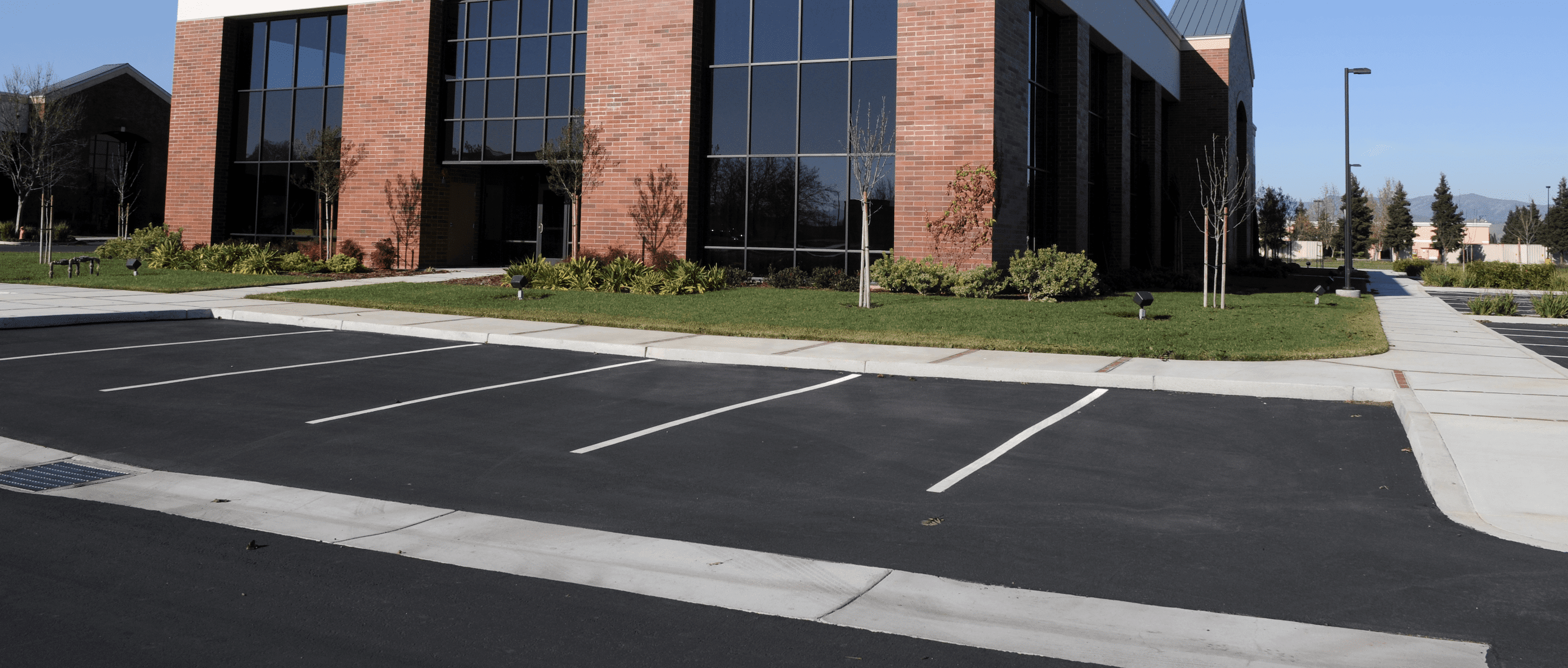
We deliver commercial pavement markings, stall re-striping, and ADA compliance layouts across commercial garages, retail centers, and multi-family facilities throughout San Francisco. Our field crews execute precise layouts engineered to maintain vehicular flow and withstand intense urban traffic and coastal moisture.
SAN FRANCISCO COMMERCIAL PAVING & MARKING OPERATIONS
San Francisco Asphalt is operated by We Love Paving, Inc. (CSLB #1049649 · DIR #1000590190 · CA CARRIER #571708), providing engineered asphalt paving, concrete repair, surface sealing, and compliant pavement markings. We manage parking facilities across San Francisco and the greater San Francisco Bay Area, applying municipal engineering standards to eliminate property liability.
Resolving Urban Parking Efficiency and Municipal Liability in San Francisco
San Francisco commercial property managers face persistent regulatory and structural challenges, from navigating aggressive Title 24 access enforcement to managing tight urban spaces where space optimization is critical. Worn, faded striping compromises vehicular flow, invites parking layout violations, and exposes building owners to substantial municipal code fines and civil liability.
Our dedicated line striping services combine precise geometric design with specialized application methods tailored to local building codes. Whether reconfiguring a multi-level commercial garage or restriping a retail lot after surface sealcoating, our crews ensure clear delineation, optimal stall count, and complete code compliance.
ENSURE CODE COMPLIANCE FOR YOUR SAN FRANCISCO FACILITY
Full-service parking lot layout, stenciling, and ADA stall upgrades across the San Francisco Bay Area.
Engineering-Led Pavement Markings for High-Density Urban Assets
We execute layout configurations using digital distance meters and laser-guided striper equipment, strictly maintaining Caltrans line dimension tolerances. Every project in San Francisco is planned around microclimate humidity and property usage schedules to deliver long-lasting adhesion and zero uncoordinated tenant disruption.
- Title 24 Precision
- Laser-Guided Lines
- BAAQMD Low-VOC Paints
- Phased Shift Execution
This Is What Our Clients Say About Our Work

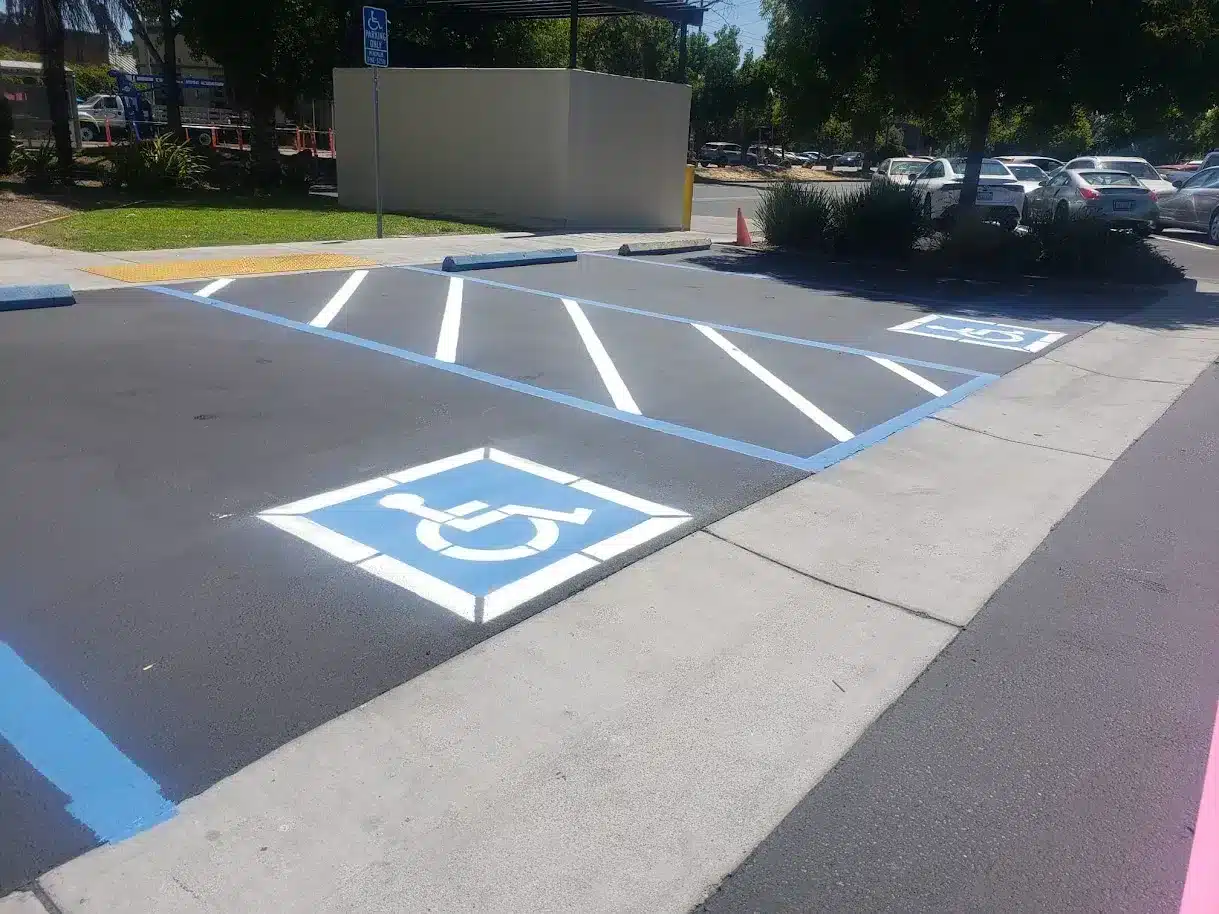
San Francisco ADA Stall Layout & California Title 24 Geometric Compliance
In San Francisco, urban typography creates unique challenges for accessibility standards. California Title 24 (Part 2, Chapter 11B) enforces stringent criteria: accessible stalls and their designated access aisles cannot exceed a 2.0% (1:50) maximum slope in any direction. When properties settle or initial asphalt grades are uneven, simply painting lines over existing marks risks statutory non-compliance and immediate legal exposure.
Our site evaluators verify surface cross-slopes and dimensions using digital levels before laying down paint. We mark standard 9-foot stalls alongside 5-foot pedestrian access aisles, and 8-foot aisles for van-accessible stalls, complete with high-visibility blue borders, white reflective International Symbols of Accessibility (ISA), and required "NO PARKING" stencil verbiage. This disciplined protocol ensures total alignment with state building mandates.
SFFD Fire Lane Delineation and Dense Urban Traffic Routing
Urban parcel density across San Francisco demands maximum space utilization without restricting emergency response vehicles. The San Francisco Fire Department (SFFD) enforces California Fire Code Section 503, mandating unobstructed emergency access widths of at least 20 feet. Faded red curbs, missing stencil notices, or non-standard turning radii can halt commercial operations during periodic fire safety inspections.
We stripe clear vehicular corridors, loading bays, crosswalks, and emergency fire lanes using specialized curbside sprayers. Fire lanes are coated in high-visibility traffic red, stenciled with crisp, white 3-inch lettering spaced every 25 feet per municipal directives. By establishing definitive right-of-way zones, our layouts keep municipal deliveries running smoothly while protecting property owners from stop-work notices or safety citations.
San Francisco Parking Layout & Pavement Marking Specifications
Review the specific physical and regulatory hurdles common to San Francisco commercial parking assets and the exact operational measures we take to protect your property.
| Property Owner Concern | San Francisco Site Condition | Contractor Standard & Mitigation |
|---|---|---|
| Premature paint peeling and washouts | Marine fog cycles and coastal dampness common to the San Francisco peninsula prevent proper curing of standard alkyd paints. | We apply 100% acrylic, rapid-dry waterborne traffic paint meeting BAAQMD Regulation 8, Rule 3 (VOC < 100 g/L), resisting maritime humidity and opening to traffic in under 45 minutes. |
| ADA non-compliance citations | Severe natural parcel grades across city commercial districts make finding flat terrain for the state-mandated 2% maximum slope difficult. | Field teams use digital smart levels to verify slopes under California Title 24 Chapter 11B prior to chalking lines, preventing costly restriping work or legal violations. |
| Fire department and delivery access blocks | Narrow city accessways and heavy loading demands create bottlenecks that violate local emergency safety passages. | Layouts preserve a continuous 20-foot clear width per SFFD / California Fire Code Section 503, marked with red curb enamel and compliant stencils every 25 feet. |
| Tenant business disruption during restriping | High-density urban facilities lack overflow parking, making daytime lot closures financially unacceptable for operating commercial tenants. | Projects are phased by sectors, or scheduled for overnight or weekend execution, following an engineered commercial asphalt maintenance traffic control plan. |
Engineered Pavement Markings Built for San Francisco Commercial Standards
Maintaining safe and compliant parking facilities in San Francisco requires balancing regional environmental mandates, tight urban dimensions, and stringent Title 24 accessibility codes. San Francisco Asphalt combines laser-accurate layout engineering with industrial, coastal-tested coatings to safeguard your property from municipal liabilities. We ensure your assets remain fully accessible, safe, and built to handle daily commercial demand.
San Francisco Commercial Parking Lot Striping FAQs
Common questions from local property managers and commercial owners regarding municipal codes, materials, and project scheduling.
How often should a commercial parking lot in San Francisco be restriped?
In high-density commercial properties across San Francisco, traffic lanes and stalls typically need restriping every 12 to 24 months. Frequent marine fog, tire scuffing from tight turning radii, and heavy delivery vehicle traffic wear down surface lines faster than in inland environments. Restriping is also required immediately following any sealcoating or structural asphalt repair.
What specific paint formulations are required for line striping in San Francisco?
Contractors operating in San Francisco must comply with Bay Area Air Quality Management District (BAAQMD) Regulation 8, Rule 3, which caps Volatile Organic Compounds (VOC) for pavement marking coatings at 100 grams per liter. We use industrial waterborne fast-dry acrylic coatings that fulfill this environmental requirement while delivering superior wear resistance against coastal humidity.
How does the San Francisco Fire Department regulate fire lanes in private lots?
Under California Fire Code Section 503, fire lanes require a minimum unobstructed width of 20 feet. Curbs bordering these routes must be painted traffic safety red and marked with the white stencil "NO PARKING - FIRE LANE" in 3-inch letters at intervals of no more than 25 feet to prevent unauthorized stopping that blocks emergency responders.
Can our parking facility stay open while restriping work is performed?
Yes. To avoid disrupting business operations and tenant vehicles, we implement sectional phasing, night work, or weekend schedules. We place directional cones and clear safety barriers to keep active portions of the lot operational while sections are stripped, painted, and cured.
How long must new concrete cure before vehicle traffic is permitted?
While light foot traffic is generally permissible after 24 to 48 hours, vehicle traffic requires the concrete to reach sufficient structural strength. Under standard curing conditions, passenger cars can drive on a new residential driveway after 7 days, while heavy commercial vehicles should wait 14 to 28 days.
Do we need to reconfigure parking stall angles during a lot restriping?
If your current configuration causes circulation issues, restriping provides an ideal opportunity to switch between 90-degree, 60-degree, or 45-degree angled layouts. Reconfiguring angles can optimize tight urban footprints, widen driving aisles to meet fire codes, and maximize parking count without encroaching on property setbacks.
Request Your Estimate
Tell us what you need help with. We'll review the project details and follow up with next steps, no obligation.
Phone
415-692-0543
Email
[email protected]
Location
511 Jacklin Rd, Milpitas
Hours
Mon–Fri 8:00 AM – 5:00 PM
Start Your Free Project Request
Use our quick estimate form to send your project details. It only takes a few minutes and helps us give you a better response.
- Project type and location
- Parking lot, driveway or commercial property
- Timeline and service needed
- Optional notes about damage or compliance issues
GATEWAY BLVD, SAN FRANCISCO
611 Gateway Blvd, South San Francisco, CA 94080, United States